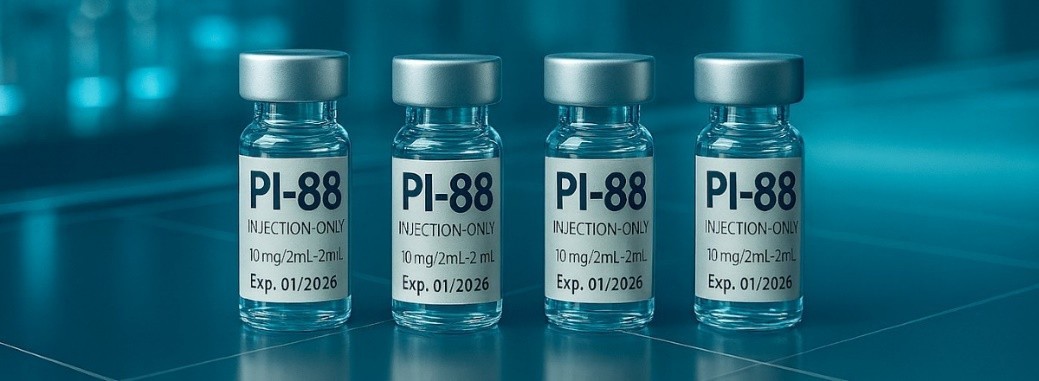
The research team led by Professor Yan-Shen Shan at the College of Medicine, National Cheng Kung University (NCKU), in collaboration with Medigen Biotech, has conducted an in-depth study on the potential of the heparanase (HPSE) inhibitor “PI-88” in treating pancreatic ductal adenocarcinoma (PDAC). The findings were published in May 2026 in the international journal Biomedicine & Pharmacotherapy.
The study found that PI-88 can reduce tumor fibrosis and, in mouse models, may enhance the effectiveness of chemotherapy when used in combination. PDAC is characterized by pronounced desmoplasia, a dense fibrotic reaction that creates an immunosuppressive tumor microenvironment (TME) and contributes to therapeutic resistance. Conventional chemotherapy may further increase HPSE expression in tumor tissues, promoting desmoplasia and tumor growth.
The research demonstrated that PI-88 can inhibit HPSE without causing cytotoxicity, thereby blocking fibrosis-related signaling, alleviating desmoplasia, and remodeling the TME to improve chemotherapy response. These findings suggest that combining PI-88 with chemotherapy holds potential for further investigation and offers a new approach for PDAC treatment.
Publication Information and Link:
Heparanase blockade sensitizes pancreatic ductal adenocarcinoma cells to chemotherapy and unleashes antitumor immunity. Biomed Pharmacother. 2026 May 8:199:119442.
https://pubmed.ncbi.nlm.nih.gov/42105693/