
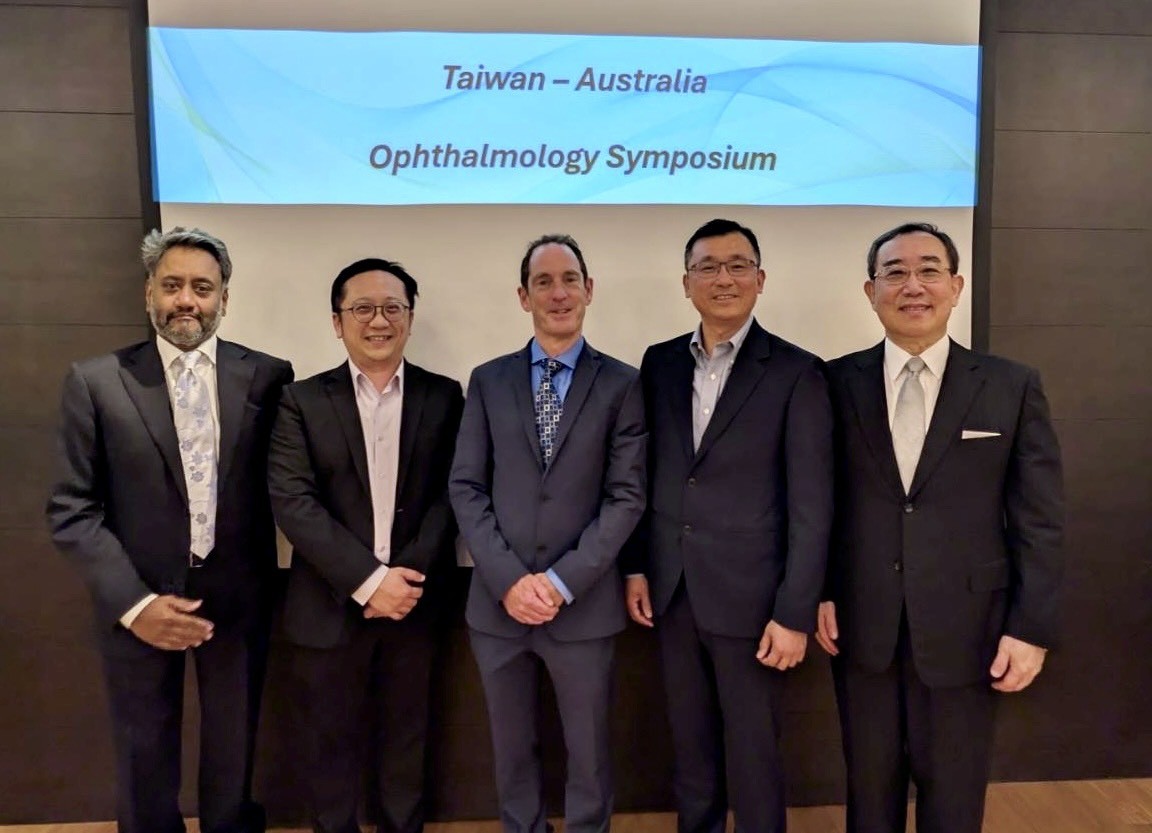
Medigen Biomedical Group hosted the Taiwan–Australia Ophthalmology Symposium on February 10, 2026, at the Grand Hyatt Taipei. This prestigious event featured keynote presentations from Professor Keith Martin, Managing Director of the Centre for Eye Research Australia (CERA), Professor Guei-Sheung (Rick) Liu, Principal Investigator at CERA, and Dr. Ta-Ching Chen from National Taiwan University Hospital, all of whom shared their latest research findings. We were also honored to welcome Mr. Robert Fergusson, the Representative of Australia in Taiwan, to the symposium. The discussions focused on leveraging innovative technologies, such as gene therapy and Artificial Intelligence (AI), to develop advanced treatment strategies for Inherited Retinal Diseases (IRDs).
Following the symposium, Medigen’s Australian subsidiary, Medic Vision AI Limited (MVA), entered into a Memorandum of Understanding (MOU) with CERA to establish a joint venture in Australia. The collaboration will leverage CERA’s RNA Base Editing Platform to develop innovative therapies for IRDs.
IRDs are genetic disorders caused by gene defects that lead to progressive vision loss. To date, more than 270 gene mutations have been identified as potential causes of IRD. These diseases typically manifest in childhood or early adulthood and may ultimately result in bilateral blindness. Some patients also suffer from concurrent hearing loss. Researchers believe that gene therapy is the best means of addressing IRDs. However, Luxturna, the only gene therapy drug currently on the market, can only treat 1–2% of IRD patients. A vast number of individuals suffering from blindness are still awaiting the arrival of more innovative treatments.
In addition, MVA signed an MOU with Winston Medical Supply Co., Ltd. (Winston) to collaborate on the development and commercialization of ophthalmic pharmaceuticals. Winston will provide product, technical, and regulatory support, while MVA will be responsible for market evaluation, regulatory affairs, and commercialization activities. The complementary core competencies of both parties are expected to generate significant collaborative synergies.
These collaborations mark an important milestone in Taiwan–Australia biotechnology cooperation. Medigen Group aims to develop innovative ophthalmic therapies with strong clinical value, bringing hope to patients suffering from vision loss.
About Centre for Eye Research Australia
Centre for Eye Research Australia is recognized as one of the top five ophthalmic research institutions globally. CERA maintains close collaborative partnerships with the University of Melbourne and the Royal Victorian Eye and Ear Hospital, forming an integrated translational research ecosystem encompassing basic research, clinical trials, and clinical care.
About Medic Vision AI Limited
Medic Vision AI Limited is a subsidiary of Medigen established under Australian Laws, focusing on the research, development, and commercialization of ophthalmic diagnostics and treatments, particularly those leveraging artificial intelligence and gene therapy technologies.